
The idea of getting a dental implant can feel intimidating when you don’t know what’s actually involved. Most of the anxiety around implant treatment comes from uncertainty — not knowing how many appointments there will be, how long healing takes, or what each stage actually feels like. So let’s walk through it, step by step, the way we explain it to every patient at iSmile. (Wondering if you’d even qualify first? Start with our guide to dental implant candidacy.)
Step 1: Your Initial Consultation
Everything starts with a conversation and an exam. At this visit, we’ll review your dental and medical history, talk through your goals, and take digital images — including 3D scans in many cases — to get a full picture of your jawbone, gum health, and remaining teeth. This is also where we answer your questions and give you a realistic sense of timeline and cost. No treatment happens at this appointment; it’s purely about gathering information and building your plan.
Step 2: Treatment Planning
Using the imaging from your consultation, we map out exactly where each implant needs to go, factoring in your bone density, nerve locations, sinus position (for upper implants), and your bite. This is also when we determine whether you’ll need any preparatory procedures, like a bone graft or sinus lift, before implants can be placed. Every plan is customized — there’s no generic template we apply to every patient.
Step 3: Preparatory Procedures (If Needed)
Not everyone needs this step, but for patients with insufficient bone volume, we may recommend a bone graft to build up the site before implant placement. If a graft is needed, it typically requires a few months of healing before the implant itself can be placed, since the goal is a solid, stable foundation. Patients who have plenty of healthy bone can often move straight to implant placement.
Step 4: Implant Placement
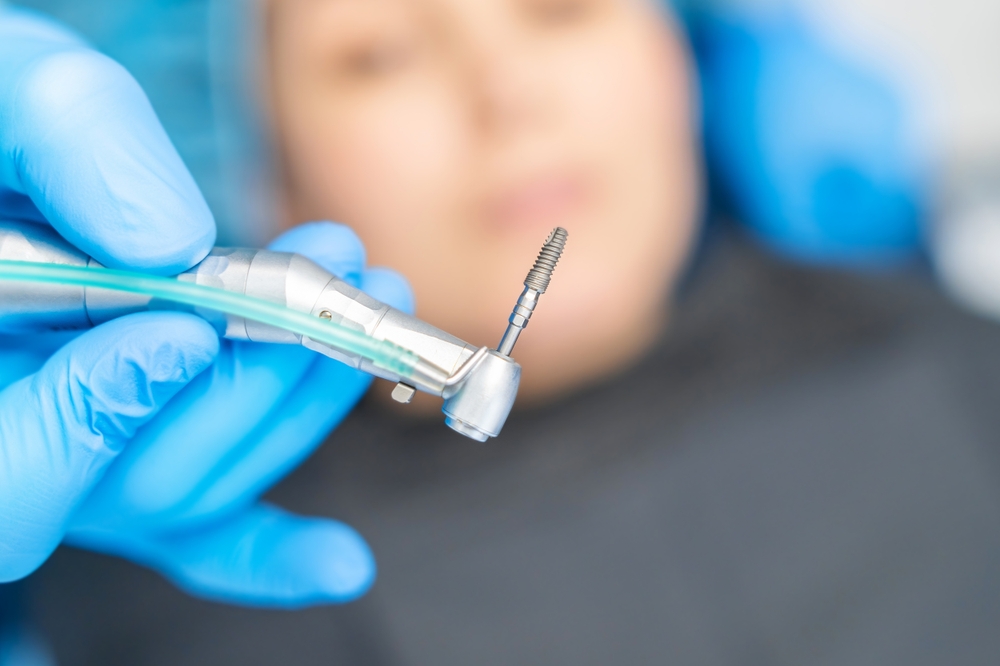
This is the surgical step where the titanium implant post is placed directly into the jawbone, acting as an artificial tooth root. Depending on your comfort level and the complexity of your case, this can be done with local anesthesia or IV sedation. Most patients describe the oral surgery itself as far less uncomfortable than they expected, and any soreness afterward is typically manageable with standard pain relief.
Step 5: Osseointegration (Healing and Bonding)
After placement, your jawbone needs time to fuse with the implant in a process called osseointegration — this is what gives implants their exceptional strength and stability, unlike removable dentures. This healing period generally takes a few months, though it varies by patient. During this time, you may have a temporary restoration in place so you’re not without teeth while you heal.
Step 6: Placing the Abutment
Once osseointegration is complete, a small connector piece called an abutment is attached to the implant. This piece will eventually hold your permanent restoration in place. In some cases, the abutment is placed at the same time as the implant; in others, it’s a separate short procedure.
Step 7: Designing and Attaching Your Final Restoration
This is the step patients tend to look forward to most. Using impressions or digital scans, we design a custom crown, bridge, or full-arch prosthesis that matches the color, shape, and function of natural teeth. Once it’s ready, it’s securely attached to the abutment — and your new smile is complete.
Step 8: Follow-Up and Long-Term Care
Implants are built to last, but that longevity depends on good care. We’ll schedule follow-up visits to make sure everything is healing and functioning correctly, and we’ll go over how to clean and maintain your implants at home — which is very similar to caring for natural teeth, just with extra attention to the gumline around the implant. Every implant we place is also backed by our implant warranty.
How Long Does the Whole Process Take?
Timelines vary based on your individual needs. A single implant with no bone grafting needed might be completed in a few months from consultation to final crown. A full-mouth case involving grafting and full-arch restoration can take longer, sometimes several months to about a year, in order to give your body the time it needs to heal properly at each stage. We’ll give you a specific timeline once we’ve evaluated your case — and we’re happy to talk through what it may cost at the same time.
You Don’t Have to Navigate This Alone
Knowing the steps ahead of time can take a lot of the anxiety out of implant treatment. At every stage, our team will walk you through exactly what’s happening, what to expect, and what comes next. If you’re ready to start with Step 1, schedule your consultation with iSmile today.
iSmile serves patients across Northeast Pennsylvania, including Dallas, Stroudsburg, North Pocono, North Scranton, Eynon, West Scranton, Mt. Pocono, Throop, and Lake Winola. Call (570) 876-4488 to get started.